
The Quick Take
Quick summary: Obagi Nu-Cil scores 7.6/10. It is one of the better-researched cosmetic lash serums we reviewed, with strong brand-backed clinical claims and a polished formula, but it is not a prostaglandin-free pick.
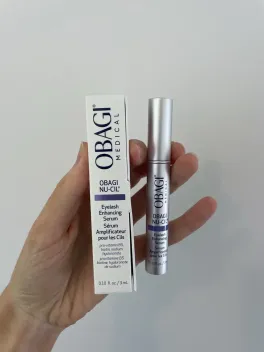
Obagi positions Nu-Cil as a cosmetic serum for thinning, sparse-looking lashes. The formula is powered by NouriPlex Technology, which Obagi describes as a blend of biotin, panthenol, sodium hyaluronate, and a proprietary lipid compound. The full ingredient list identifies that compound as dehydrolatanoprost.
That matters. The clinical-performance story is stronger than most OTC serums, but the safety profile belongs in the prostaglandin-analogue bucket, not the peptide-only bucket.
What changed on
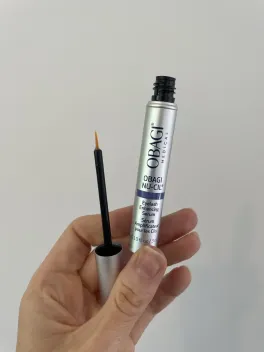
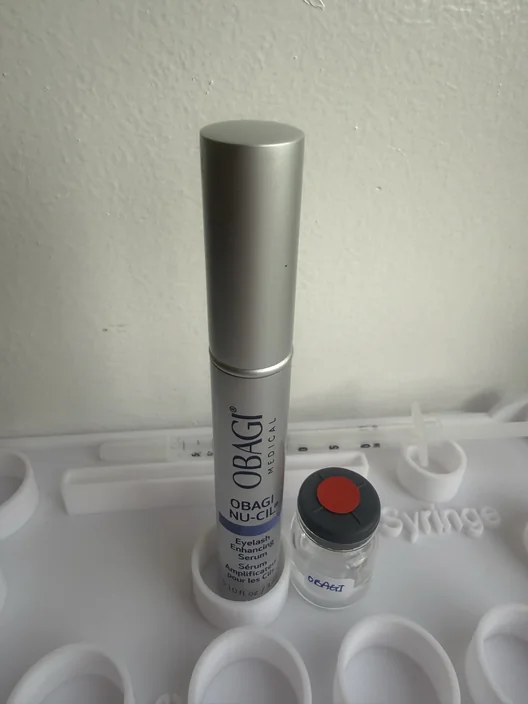
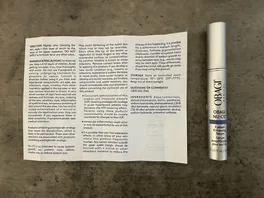
We added original package photography and transcribed the ingredient list and warnings from the English insert, including dehydrolatanoprost and the pigmentation precautions. The official price, score, and ranking are unchanged.
Verdict: Score and ranking unchanged after this source check.
Brand and product timeline
-
Obagi announces Nu-Cil
Obagi introduced Nu-Cil Eyelash Enhancing Serum with a planned September launch at $120 for 3 mL. Source
-
Packaging changes
The official page shows silver and purple packaging and calls the transition a new look for the same product. Source
-
Price rechecked
The current direct price is $125, with a 15% subscription option shown on the brand page. Source
Package label check:
What we found on the photographed unit: The English insert names dehydrolatanoprost and includes a dedicated Warnings and Precautions section. It says prostaglandin-analogue products may cause iris discoloration, which is likely to be permanent, and may cause eyelid skin darkening that may or may not be reversible.
Ingredient list shown on the insert: Aqua/Water/Eau, Dehydrolatanoprost, Biotin, Panthenol, Sodium Hyaluronate, Phenoxyethanol, C12-15 Alkyl Benzoate, Caprylyl Glycol, Acrylates/C10-30 Alkyl Acrylate Crosspolymer, Alcohol, Sodium Hydroxide, Phenethyl Caffeate.
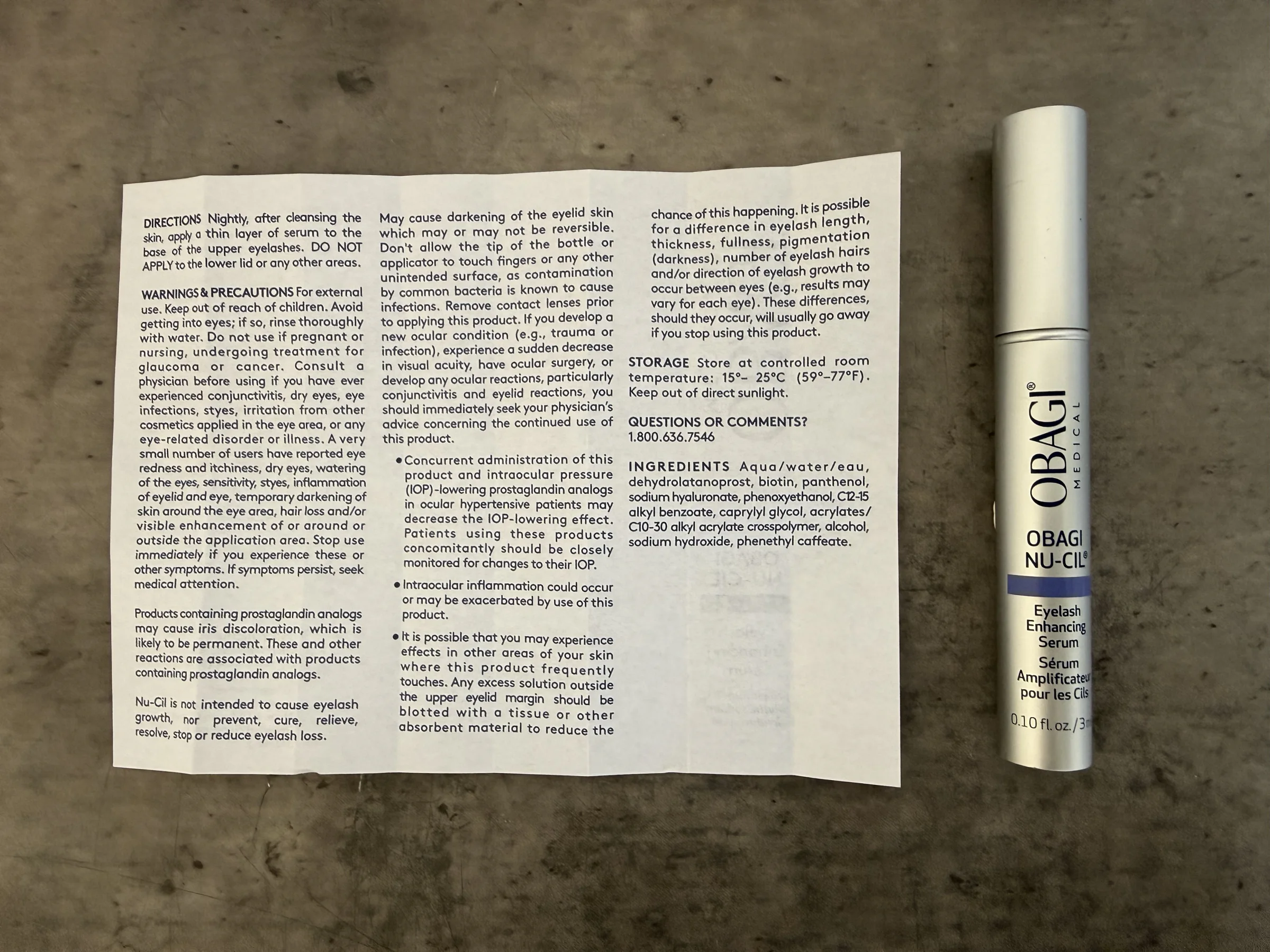
Evidence limit: This documents one photographed unit. Packaging, formulas, and inserts can vary by market, lot, size, and date. The photograph does not establish how often a reaction occurs or prove that the finished formula is safe for every user.
Review Snapshot
| Review factor | What our review found |
|---|---|
| Overall score | 7.6/10 |
| Formula status | Contains prostaglandin analogue |
| Primary active | Dehydrolatanoprost within NouriPlex Technology |
| Supporting ingredients | Biotin, panthenol, sodium hyaluronate |
| Best for | Users who want a physician-channel brand and are comfortable with analogue risk |
| Main caveat | Premium price and permanent iris-pigmentation warning language |
✓ What We Liked
- Obagi publishes clear clinical-result claims for density and thickness appearance
- Ingredient list is easy to audit once expanded on the product page
- Formula includes useful lash conditioners alongside the active lipid compound
- Nightly-use instructions are specific and conservative
✗ What Could Be Better
- Contains dehydrolatanoprost, so it is not prostaglandin-free
- Brand uses cosmetic-claims language rather than saying it grows lashes
- $125 is expensive compared with peptide alternatives
- Product warnings still include possible permanent brown iris pigmentation
Key Ingredients
⚠ Ingredient Alert
Obagi identifies dehydrolatanoprost as the proprietary lipid compound in NouriPlex Technology. We classify this as a prostaglandin-analogue formula for ranking and safety-scoring purposes.
Our Full Review
A Strong Clinical Story, With a Real Safety Tradeoff
Obagi Nu-Cil has a more medical-feeling presentation than most cosmetic lash serums. The brand points to a 2021 16-week blinded study, reports improvement in lash density and thickness appearance for 89% of participants, and says some participants saw results as early as 8 weeks. That is better substantiation than most OTC products offer.
The ingredient list is also more transparent than the marketing copy at first glance. The NouriPlex blend sounds gentle until you expand the full ingredient list and see dehydrolatanoprost near the top, alongside biotin, panthenol, and sodium hyaluronate. Biotin and panthenol are supportive conditioners. Dehydrolatanoprost is the ingredient that changes the risk category.
Who It Makes Sense For
Obagi Nu-Cil is best for shoppers who already trust Obagi, prefer a physician-channel brand, and are comfortable with a prostaglandin-analogue risk profile after reading the safety warnings. It is more compelling than older drugstore prostaglandin formulas because the clinical presentation is stronger and the user instructions are unusually clear.
It is not our first recommendation for sensitive eyes, light eyes, pregnancy, or anyone trying to avoid prostaglandin-style compounds. For those users, the safer move is a peptide or botanical serum higher in our ranking.
Application and Use
Obagi instructs users to apply a thin layer nightly to the base of the upper lash line after cleansing, remove contact lenses before application, and wait 90 seconds before applying other eye-area products. The product is not recommended for brows or the lower lash line. We like that specificity because migration and over-application are common causes of lash-serum irritation.
The formula is fragrance-free and oil-free, which helps the irritation profile. The brand still notes that temporary tingling or redness can occur and recommends discontinuing use if irritation persists.
Value
At $125, Obagi sits in the premium OTC tier. The price is easier to justify if you value Obagi's brand credibility and clinical-data presentation. It is harder to justify if your main goal is a low-risk serum, because several prostaglandin-free formulas cost less and avoid the analogue tradeoff entirely.
Safety Notes
The most important label language is Obagi's iris-pigmentation warning. Obagi says no clinical participants showed iris-pigmentation change, but also warns that increased brown iris pigmentation is possible and would likely be permanent. That is exactly why Nu-Cil cannot rank above strong prostaglandin-free options in our methodology.
If you have light eyes, active eye disease, recent eye surgery, pregnancy, or a history of lash-serum irritation, speak with a clinician before using Obagi Nu-Cil.
Our Verdict
Obagi Nu-Cil is the most credible new prostaglandin-analogue addition to our ranking. The clinical claims and application guidance are stronger than many competitors, but the ingredient profile keeps it below the best prostaglandin-free serums. We rank it #8 overall: a solid choice for analogue-tolerant users, not a default first pick.
Where to Buy
FAQ
Is Obagi Nu-Cil prostaglandin-free?
No. Obagi Nu-Cil contains dehydrolatanoprost, which we classify as a prostaglandin-analogue ingredient for safety scoring.
How long does Obagi Nu-Cil take to work?
Obagi says participants in its clinical study saw results as early as 8 weeks, with more pronounced results at 16 weeks.
Can Obagi Nu-Cil change eye color?
Obagi says no clinical participants showed iris-pigmentation change, but the brand warning notes that increased brown iris pigmentation is possible and would likely be permanent.