Castor Oil vs Lash Serum: Which Actually Works for Lash Growth?
Castor oil is the most searched DIY lash growth method on the internet. With over 9,700 monthly Amazon searches for "castor oil for eyelashes," it's clear that people want a natural, inexpensive way to grow longer lashes. The appeal makes sense - a $5 bottle of oil versus a $30+ lash serum feels like an obvious choice if both actually work.
But here's the question nobody seems to answer honestly: does castor oil actually grow lashes, or does it just condition the ones you already have? I spent weeks digging through clinical literature, comparing ingredient mechanisms, and testing both approaches as part of our full testing methodology. Here's what the evidence actually says.
Quick Verdict
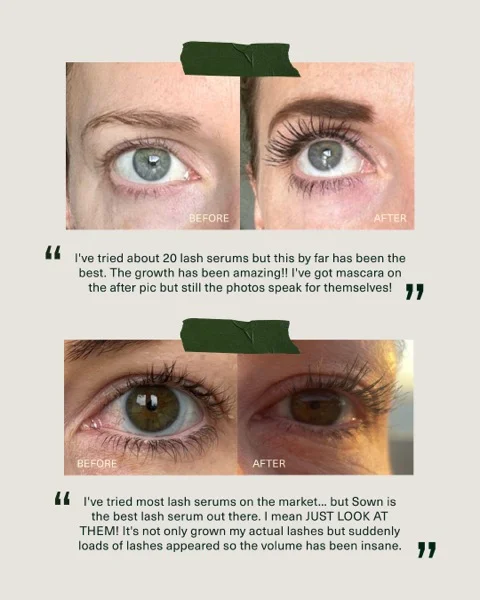
Dedicated lash serums outperform castor oil for measurable lash growth. Castor oil is an excellent conditioner, but no clinical evidence supports it as a growth stimulant. Our top pick SOWN Root 1 uses peptides and botanicals for clinically-backed results without prostaglandin analogues.
Does Castor Oil Actually Grow Lashes?
The short answer: there is no clinical evidence that castor oil grows eyelashes. Zero peer-reviewed studies have demonstrated that castor oil extends the anagen (growth) phase of the lash cycle or stimulates new follicle activity. This is not a controversial statement in dermatology - it's simply a gap in the evidence that the beauty internet has chosen to ignore.
The claim typically centers on ricinoleic acid, a fatty acid that makes up roughly 90% of castor oil's composition. Ricinoleic acid does have legitimate properties: it's anti-inflammatory, antimicrobial, and a strong humectant. These properties make castor oil an effective conditioner for hair, including lashes. It coats the hair shaft, reduces moisture loss, and can make lashes feel softer and look shinier.
What ricinoleic acid does not do is signal lash follicles to enter or stay in the growth phase. It doesn't stimulate keratin production. It doesn't interact with the prostaglandin receptors that regulate the lash growth cycle. The mechanism for actual growth simply isn't there.
So why do so many people swear castor oil worked for them? Two reasons. First, healthier, better-conditioned lashes break less. If your lashes were previously dry and brittle, reducing breakage alone can create the appearance of longer, fuller lashes - even though no new growth occurred. Second, confirmation bias is powerful. When you apply something to your lashes every night for eight weeks while paying close attention to them, you're primed to see improvement whether it's there or not.
None of this means castor oil is bad. It's a perfectly fine lash conditioner. But conditioning and growth are different things, and the distinction matters when you're choosing how to spend your time and money.
How Lash Serums Work Differently
Dedicated lash serums take a fundamentally different approach than castor oil. Instead of just conditioning the exterior of the lash, they target the biological processes that control lash growth at the follicle level. There are two main categories:
Peptide-Based Serums
Peptides are short chains of amino acids that can signal cells to perform specific functions. In lash serums, peptides like myristoyl pentapeptide-17 and biotinoyl tripeptide-1 stimulate keratin production - the structural protein that lashes are made of. By increasing keratin synthesis at the follicle, peptide serums support thicker, stronger lash growth from the root.
Peptide serums also commonly include biotin, panthenol, and botanical extracts that nourish the follicle environment. The approach is gentler and carries very low side effect risk, though results typically take 8-12 weeks to become visible. This is the category where products like SOWN, The Ordinary Multi-Peptide, and Vegamour GRO operate.
Prostaglandin-Based Serums
Prostaglandin analogues (like bimatoprost in Latisse or isopropyl cloprostenate in GrandeLASH-MD) directly extend the anagen growth phase of the lash cycle. This allows each lash to grow for a longer period before it naturally falls out, producing noticeably longer lashes in as little as 4-8 weeks.
The clinical evidence for prostaglandin-driven lash growth is strong - these compounds were originally discovered as a side effect of glaucoma eye drops. However, they carry meaningful side effect risks including iris color change, eyelid darkening, and periorbital fat loss. For a full breakdown, see our lash serum side effects guide.
Why Serums Outperform Oil
The difference comes down to mechanism. Castor oil sits on the surface of the lash and conditions what's already there. Lash serums deliver active compounds - whether peptides or prostaglandins - to the follicle, where actual growth is regulated. One approach protects existing lashes; the other stimulates the production of new, longer ones.
Side-by-Side Comparison
| Factor | Castor Oil | Peptide Lash Serum | Prostaglandin Serum |
|---|---|---|---|
| Clinical evidence for growth | None | Moderate | Strong |
| Side effects | Low | Very Low | Moderate-High |
| Cost per month | $2 - $5 | $15 - $25 | $15 - $50 |
| Time to results | Conditioning in 2 - 4 weeks | 8 - 12 weeks | 4 - 8 weeks |
| Application | Messy / thick | Precise applicator | Precise applicator |
| Prostaglandin-free | Yes | Yes | No |
When Castor Oil Makes Sense
Even though castor oil doesn't drive actual lash growth, there are legitimate reasons to use it:
- You're on a tight budget. At $2-$5 per month, castor oil is essentially free compared to lash serums. If you can't afford a serum right now but want to do something for your lashes, castor oil is a reasonable starting point for basic conditioning.
- Your lashes are dry and brittle. If breakage is your main problem rather than slow growth, castor oil's conditioning properties can genuinely help. Reducing breakage preserves the length you already have, which may be all you need.
- You want to pair it with a lash serum. Castor oil works well as a complementary treatment alongside a dedicated serum. Use your serum at night on clean lashes (so it can absorb properly), and apply castor oil in the morning or on alternate nights for extra conditioning.
- You prefer completely natural products. If synthetic peptides or any lab-formulated ingredients are dealbreakers for you, castor oil is about as natural as it gets. Just set realistic expectations about what conditioning can and can't do.
When to Choose a Lash Serum Instead
A dedicated lash serum is the better choice if:
- You want measurable lash growth. If your goal is actually longer, thicker lashes - not just better-conditioned existing lashes - you need a serum with active growth-supporting ingredients like peptides or prostaglandin analogues. Castor oil won't get you there.
- Your lashes are thin or sparse. If you're dealing with naturally sparse lashes, age-related thinning, or lash loss from extensions or medical treatments, you need follicle-level support that only a formulated serum can provide.
- You want clinically backed results. Peptide serums and prostaglandin serums both have clinical or published evidence supporting their mechanisms. If evidence-based skincare matters to you, serums are the clear choice over an unproven folk remedy.
- You're tired of messy application. Castor oil is thick, sticky, and notoriously difficult to apply precisely to the lash line without getting it everywhere. Lash serums come with precision applicators designed specifically for the delicate eye area.
- You've tried castor oil and didn't see results. If you've been diligently applying castor oil for months without meaningful change, that's your answer. Switching to a serum with actual growth-supporting actives is the logical next step.
Our Lash Serum Recommendations
If you're ready to move beyond castor oil to a serum that can deliver real growth, here are our top prostaglandin-free picks:
SOWN Root 1 - 9.4/10
Best overall without prostaglandin. Peptide-and-botanical formula delivers visible growth in 8-10 weeks. Clean ingredient profile, precise applicator, and no risk of iris darkening or orbital fat loss. Our top-ranked lash serum overall.
The Ordinary Multi-Peptide Lash and Brow Serum - 8.2/10
Best budget option. At under $15, this is the most affordable dedicated lash serum worth using. Multi-peptide complex with multiple active ingredients. Results are more modest than SOWN but far more evidence-backed than castor oil.
Vegamour GRO Lash Serum - 8.7/10
Best plant-based formula. Uses mung bean, red clover, and curcumin for a 100% vegan approach to lash support. Good choice if you want a clean-beauty-aligned serum that still outperforms castor oil by a wide margin.
Frequently Asked Questions
Does castor oil grow eyelashes?
There is no clinical evidence that castor oil stimulates new eyelash growth. Castor oil contains ricinoleic acid, which has anti-inflammatory and moisturizing properties that can condition existing lashes and reduce breakage, making them appear healthier and fuller. However, no peer-reviewed study has demonstrated that castor oil extends the anagen (growth) phase or triggers new follicle activity the way peptide-based or prostaglandin-based lash serums do.
Is castor oil or lash serum better for lash growth?
Dedicated lash serums are better for measurable lash growth. Peptide-based serums stimulate keratin production and support the lash growth cycle with clinically studied ingredients. Prostaglandin-based serums extend the anagen growth phase for even faster results, though with more side effect risk. Castor oil is an effective conditioner that reduces breakage and adds moisture, but it lacks the active compounds needed to drive actual new growth.
Can I use castor oil and lash serum together?
Yes, you can use both, but apply them at different times. Use your lash serum at night on clean, bare lashes as directed, since serums need direct contact with the lash line to work. You can apply castor oil in the morning or on alternate nights as a conditioning treatment. Avoid layering castor oil directly over your serum, as the thick oil can create a barrier that reduces serum absorption.
What is the best lash serum without prostaglandin?
Our top-rated prostaglandin-free lash serum is SOWN Root 1 (9.4/10), which uses a peptide-and-botanical formula to support lash growth without prostaglandin analogues. Other strong prostaglandin-free options include Vegamour GRO (8.7/10) for a plant-based approach and The Ordinary Multi-Peptide Lash and Brow Serum (8.2/10) for a budget-friendly option. All three avoid the side effect risks associated with prostaglandin analogues like iris darkening and orbital fat loss.