The Best Peptide Lash Serums of 2026, Ranked and Reviewed
A peptide lash serum is a lash growth serum that uses short amino acid chains to strengthen and lengthen eyelashes without the documented side effects of prostaglandin-based alternatives. If you have been researching lash serums and want something that works with your body rather than pharmacologically overriding it, peptide formulas are the category to focus on.
But before jumping into product picks, it helps to understand what peptides actually are, which specific compounds to look for on an ingredient label, and how they compare to the prostaglandin serums that dominate pharmacy shelves. The science behind these formulas is what separates a good purchase from wasted money.
What Are Peptides? The Science Behind Lash Serums
A peptide is a short chain of amino acids, typically between 2 and 50 units linked together, that acts as a biological messenger within the body. Peptides are everywhere in skincare and dermal science, from anti-aging creams to wound-healing treatments. In the context of lash enhancement, specific peptides have been engineered to target the hair follicle and influence the processes that determine lash length, thickness, and retention.
The connection between peptides and hair biology is well established in dermatological research. Your lashes, like all hair, are made primarily of a protein called keratin. Peptides can signal the cells at the base of each follicle to ramp up keratin production, effectively telling your body to build stronger, longer lash fibers. This is the same fundamental mechanism that makes peptides popular in broader beauty science for stimulating collagen, another structural protein.
There are several categories of peptides used in lash serums, each working through a different mechanism:
Signal Peptides
The two best-researched peptides for eyelash growth are Myristoyl Pentapeptide-17 and Biotinoyl Tripeptide-1. Look for these named specifically on the ingredient label rather than a vague "peptide complex": if a brand does not disclose which peptides it uses, you have no way to assess whether the formula can deliver what it promises.
Signal peptides are the most important category for lash strengthening. These peptides communicate directly with follicular cells, instructing them to increase keratin production. Myristoyl Pentapeptide-17 is the most well-studied signal peptide in lash care. Ingredient-level laboratory work reports increased keratin gene expression for this peptide. That is a finding about the ingredient in a lab setting, not a measured lash result, and we have not located a finished-formula trial that turns it into a predicted length or thickness outcome. You will find this ingredient listed in the formulas of most serious peptide lash serums, and it is a key compound in our ingredient database.
Biotin Peptides
Biotinoyl tripeptide-1 is the standout molecule in this category. It combines the signaling properties of a peptide chain with the follicle-nourishing benefits of biotin (vitamin B7). These dual-function molecules stimulate anchoring proteins at the base of the lash follicle, reducing premature fallout while simultaneously supporting the metabolic processes that sustain active development. Clinical studies on biotinoyl tripeptide-1 have demonstrated measurable improvements in hair density when applied topically around the follicle.
Conditioning Peptides
Conditioning peptides work on the lash fiber itself rather than the follicle. They penetrate the cortex of the hair shaft, improving elasticity and reducing breakage. A lash that does not snap midway through its cycle will reach its full potential length, and that alone can create a visible improvement in overall lash appearance. These peptides overlap with the conditioning peptides used in premium serums for facial hair and brow treatments. For more on how individual ingredients work, see our complete ingredient guide.
The most effective peptide lash growth serums combine multiple peptide types to address strengthening, retention, and conditioning simultaneously. This multi-pathway approach is what makes peptide serums competitive with prostaglandin analogs despite working through gentler, non-hormonal mechanisms.
Peptides vs. Prostaglandins: A Complete Comparison
Understanding the difference between peptide and prostaglandin lash serums is the single most important decision you will make when shopping in this category. These two approaches work through fundamentally different biological pathways, and the distinction matters for both results and safety. We cover prostaglandin serums in depth in our prostaglandin-free guide and our side effects guide, but here is the direct comparison.
Three Approaches to Lash Growth
How each ingredient type stimulates growth, and what to expect.
How Each One Works
Prostaglandin analogs (like bimatoprost and isopropyl cloprostenate) are hormone-like compounds that pharmacologically override the hair cycle. Originally developed as glaucoma medication, they force follicles into an extended active phase. They are potent but act as a blunt instrument: they affect all tissue they contact, including the iris, eyelid tissue, and orbital fat pads. Latisse is the most well-known prostaglandin serum, and several other popular products like GrandeLASH-MD and RevitaLash contain prostaglandin derivatives.
Peptides work through targeted cell signaling. They instruct follicular cells to produce more keratin and strengthen anchoring proteins, supporting the existing cycle rather than overriding it. No hormonal disruption, no dermal fat changes, no iris pigmentation risk.
Safety Profile
This mechanistic difference explains the dramatic gap in side effect profiles. Prostaglandin serums carry documented risks of irreversible iris color darkening, periorbital fat loss (sunken eye appearance), eyelid hyperpigmentation, chronic eye redness, and misdirected lash direction. These are not theoretical risks; they are reported in clinical literature and FDA labeling.
Peptide lash serums have none of these risks. The most common side effect is mild, temporary irritation at the application site, which is uncommon and resolves quickly. For users with sensitive eyes or reactive complexions, peptide serums are the safer category by a wide margin.
Results Timeline
Prostaglandin serums typically show visible results in 4 to 8 weeks because they force the cycle into overdrive. Peptide serums require 6 to 12 weeks for noticeable improvement, with full results at 12 to 16 weeks. The slower timeline reflects the gentler mechanism. For a detailed breakdown of what to expect week by week, see our timeline guide.
Maintenance and Discontinuation
Both types require ongoing use. With prostaglandins, stopping leads to a relatively rapid return to baseline as the artificially extended phase normalizes. With peptides, the transition is more gradual because improvements in lash fiber strength and reduced breakage persist for a time even after discontinuation.
For most users, the slightly longer timeline of peptide serums is a worthwhile trade-off for avoiding the prostaglandin-analogue side-effect class. If your primary concern is avoiding side effects while still achieving meaningful results, peptides are the clear choice.
Peptides in the Broader Skincare Context
Peptides are not exclusive to lash serums. They are one of the most researched active ingredient categories in modern skincare and cosmetic science. Understanding where lash peptides fit within the broader peptide landscape helps explain why they work and what separates marketing claims from real science.
In facial skincare, peptides like Matrixyl (palmitoyl pentapeptide-4) signal skin cells to produce more collagen, reducing fine lines and improving skin texture. Copper peptides support wound healing and skin remodeling. Argireline (acetyl hexapeptide-3) relaxes facial muscles to soften expression lines. The underlying principle is always the same: a small amino acid chain delivers a specific biological instruction to targeted cells.
Lash growth peptides operate on this identical principle, but their instructions target the hair follicle rather than dermal cells. Myristoyl Pentapeptide-17 tells follicle cells to produce keratin. Biotinoyl tripeptide-1 tells anchoring proteins to hold the lash more firmly. The specificity of these signals is what makes peptide-based approaches safer than hormone-driven alternatives, both in topical treatments and in lash care.
This broader context also explains why many peptide lash serums contain ingredients you would recognize from your moisturizer or eye cream: hyaluronic acid, panthenol, niacinamide, and botanical extracts. These supporting ingredients create a healthy environment around the follicle, improving peptide absorption and reducing irritation. A peptide lash serum is, in many ways, a targeted treatment for the lash line.
How We Tested These Peptide Serums
Every serum in this guide was purchased with our own money and scored without compensation from any brand. Panel sizes differ by product and each review states its own, so read the 25+ tester figure as the size of the broader research programme rather than a per-product panel. Where we have no product-specific panel result, the review says so. We evaluated each formula on peptide formulation quality, supporting ingredient evidence, real-world tester results, application experience, and value per month. No free product, no sponsored placements, and no pay-to-play rankings, ever. You can read our full methodology for the complete scoring rubric and conflict-of-interest policy.
Our Top 6 Peptide Lash Serums for 2026
We evaluated each serum on peptide formulation strength, supporting ingredient quality, clinical evidence, real-world user results, safety, and overall value. Every product below uses peptides as its primary mechanism and is completely free of prostaglandin analogs. For our full scoring criteria, see our methodology page.
1. SOWN Root 1, 9.4/10
Price: $58 | Key peptide: Rootboost peptide complex | Full review →

SOWN Root 1 earns the top spot for its proprietary Rootboost peptide complex, a multi-peptide blend anchored by Myristoyl Pentapeptide-17 and biotin that targets the follicle at every stage of the lash cycle. The peptide complex signals increased keratin production while strengthening the anchoring proteins that prevent premature fallout.
What elevates Root 1 is the quality of its supporting ingredients. Panthenol and hyaluronic acid condition and hydrate existing lashes, reducing breakage while peptide-driven strengthening develops. The formula is ophthalmologist-tested, vegan, and free of fragrance, parabens, sulfates, and all prostaglandin analogs. Users consistently report visible improvement by week 8. At $58 per tube (approximately a 3-month supply), Root 1 delivers the strongest peptide formulation at a price that undercuts most competitors. If you also want a brow serum from the same line, see our eyebrow serum guide.
Pros: Strongest peptide complex in our testing; clean botanical supporting ingredients; ophthalmologist-tested; excellent value per month; consistent user results by week 8.
Cons: Only available online through the brand website; newer brand with less long-term market history.
2. Vegamour GRO Lash Serum, 8.7/10
Price: $72 | Key peptide: Plant-derived peptides | Full review →

Vegamour GRO combines plant-derived peptides with a proprietary blend of mung bean, red clover, and curcumin extracts to create a phyto-peptide approach. The plant peptides work alongside the botanical actives to combat oxidative stress at the follicle while signaling increased keratin production, a dual mechanism that addresses both stimulation and follicular health.
The brand has invested heavily in clinical validation, with a peer-reviewed study demonstrating a 94% increase in the appearance of lash density over 90 days. The formula is 100% vegan, cruelty-free, and completely hormone-free. At $72, Vegamour GRO sits at a higher price point than our top pick without delivering meaningfully better results. The plant peptide approach appeals to those who prefer botanical-first formulations, but the price premium is hard to justify purely on efficacy.
Pros: Plant-derived peptide approach; backed by clinical study; 100% vegan and hormone-free; widely available at Sephora; pleasant, lightweight texture.
Cons: Higher price than Root 1 without superior results; botanical peptides may take slightly longer to show effects; $72 is steep for a 3-month supply.
3. LashFood Phyto-Medic Eyelash Enhancer, 8.5/10
Price: $72 | Key peptide: Nano-peptide technology | Full review →

LashFood takes a differentiated approach with its nano-peptide technology. Standard peptides can struggle to penetrate the follicle effectively due to molecular size. LashFood's nano-peptides are engineered for smaller particle size and deeper follicular penetration, which the brand claims accelerates the delivery of signaling molecules compared to conventional peptide formulations.
The supporting formula includes soy protein for strengthening, lavender extract for conditioning, and a proprietary amino acid blend that supports keratin production. LashFood holds Ecocert certification and is free of prostaglandins, parabens, sulfates, and phthalates. The product has built a loyal following among users with sensitive eyes who have reacted poorly to other serums.
At $72, it matches Vegamour's price point. The nano-peptide delivery mechanism is a genuine differentiator, but it does not translate to dramatically faster or better results in practice. Best suited for users who have tried standard peptide serums without success and want to try a different delivery technology.
Pros: Nano-peptide delivery for improved absorption; Ecocert-certified; excellent track record with sensitivity-prone users; comprehensive ingredient profile.
Cons: Same price as Vegamour without clear performance advantage; nano-peptide claims lack independent verification; smaller tube size reduces per-month value.
4. NuOrganic Cosmic Lash Serum, 8.3/10
Price: $55 | Key peptide: Stem cell + peptide complex | Full review →

NuOrganic Cosmic Lash combines a peptide complex with plant stem cell technology to target lash strengthening from two angles. The peptide component signals keratin production and supports follicular anchoring, while the stem cell extracts aim to revitalize dormant follicles and extend the active phase. The dual-mechanism approach is scientifically interesting, though independent clinical data on this specific combination is limited.
The formula includes biotin peptides, panthenol, and amino acids that condition lashes while promoting strength. It is prostaglandin-free with a clean ingredient list. Users generally report noticing improvements around weeks 8 to 10, consistent with other mid-range peptide serums.
At $55, NuOrganic is priced slightly below our top pick. A solid peptide serum with an interesting stem cell angle, but it does not outperform Root 1 in our testing despite the similar price.
Pros: Interesting stem cell + peptide dual mechanism; clean ingredient list; competitive price point; fast-absorbing texture; prostaglandin-free.
Cons: Limited clinical data on the stem cell + peptide combination; does not outperform the top pick at a similar price; less established brand reputation.
5. The Ordinary Multi-Peptide Lash & Brow Serum, 8.2/10 (Best Budget)
Price: $14.90 | Key peptide: Multi-peptide complex | Full review →
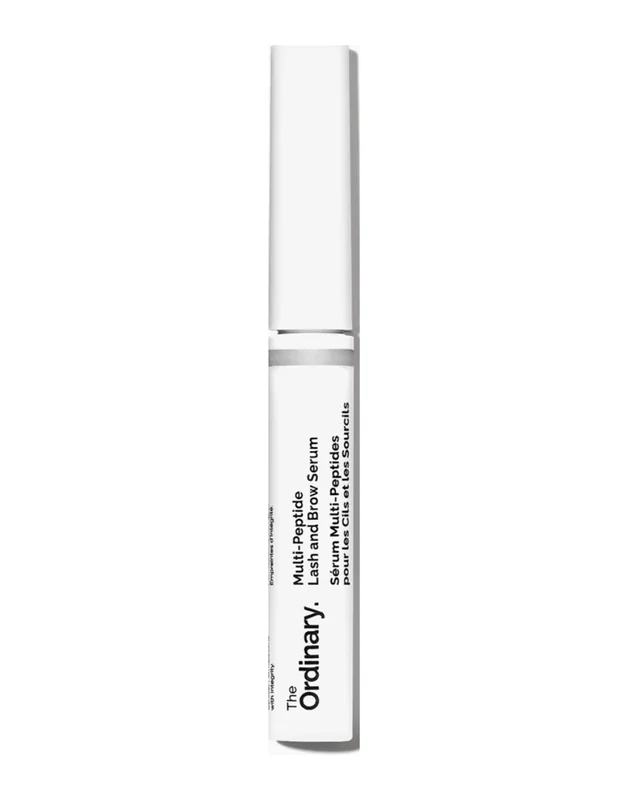
At $14.90, The Ordinary's Multi-Peptide Lash & Brow Serum is the most affordable serious peptide option on the market, and it delivers far more than its price suggests. True to the brand's philosophy of transparent, science-backed formulations at accessible prices, the formula packs multiple peptide complexes including Myristoyl Pentapeptide-17, biotinoyl tripeptide-1, and a proprietary Laniceps Capsule alongside caffeine and biotin.
The serum doubles as an eyebrow serum, adding to its value. Application uses a doe-foot wand, though some users find the applicator slightly large for precise lash-line placement. Results appear gradually over 8 to 16 weeks, with conditioning and reduced breakage occurring before noticeable length gains.
This will not deliver the same level of results as Root 1 or Vegamour GRO. The peptide concentrations are lower and the supporting ingredient profile is simpler. But the value-to-performance ratio is extraordinary. If you are on a tight budget or want to test whether peptide-based lash care works for you before investing in a premium option, The Ordinary is the obvious starting point. We also featured it in our best budget lash serums roundup.
Pros: Unbeatable price for a genuine peptide formula; includes Myristoyl Pentapeptide-17; doubles as brow serum; transparent ingredient philosophy; widely available at Sephora, Ulta, and online.
Cons: Results more subtle than mid-range and premium picks; applicator could be more precise; lower peptide concentration than top-ranked options; takes longer to see visible change.
6. Terez & Honor Lash Serum, 8.0/10
Price: $25 | Key peptide: Capixyl peptide complex | Full review →

Terez & Honor brings a K-beauty sensibility to peptide lash care with its Capixyl peptide complex, a combination of the biomimetic peptide acetyl tetrapeptide-3 and red clover extract. Capixyl was originally developed for scalp hair loss and has been adapted for lash applications. The peptide component targets follicular anchoring while the red clover isoflavones provide anti-inflammatory support at the follicle base.
The formula also includes panthenol, sodium hyaluronate, and ginseng root extract, reflecting the Korean beauty emphasis on hydration and nourishment alongside active ingredients. The serum has a gentle, gel-like consistency that applies smoothly without stinging or causing redness, even for users with very sensitive skin around the eyes.
At $25, Terez & Honor occupies an attractive middle ground between The Ordinary's budget pricing and the $50+ premium tier. Results are more modest than our top picks; expect improvements in lash condition and subtle fullness rather than dramatic length gains. Also featured in our budget lash serums guide.
Pros: Capixyl peptide complex with clinical heritage; exceptionally gentle K-beauty formulation; good for sensitive eyes; affordable mid-range price; pleasant gel texture.
Cons: Results are more subtle than top-ranked options; Capixyl has more clinical data for scalp hair than lashes specifically; limited retail availability outside Amazon.
Which Peptide Serum Is Right for You? Pick by Lash Type, Budget, and Sensitivity
Want the cheapest peptide serum that earned its spot? Start with The Ordinary. Want the strongest formula we tested? Go with our number-one pick. Use the table below to match each serum to your situation before you buy.
| Product | Peptide actives | Prostaglandin-free | Price tier and why pay more | Best for |
|---|---|---|---|---|
| SOWN Root 1 (9.4/10) | Myristoyl Pentapeptide-17, Biotinoyl Tripeptide-1 (Rootboost complex) | Yes | Mid ($58): strongest named peptide stack, botanicals, ophthalmologist-tested | Best all-around; strongest peptide formula we tested |
| Vegamour GRO (8.7/10) | Multi-peptide complex (plant-derived) | Yes | Prestige ($72): clinical study + Sephora availability adds cost over similar performance | Botanical-first preference; Sephora shoppers |
| LashFood (8.5/10) | Multi-peptide complex (nano-peptide delivery) | Yes | Prestige ($72): nano-peptide delivery system + Ecocert certification | Sensitive eyes; tried standard peptides without success |
| NuOrganic Cosmic Lash (8.3/10) | Multi-peptide complex with plant stem cells | Yes | Mid ($55): stem cell + peptide dual approach at similar price to top pick | Those wanting a stem cell + peptide formula; similar budget to top pick |
| The Ordinary Multi-Peptide (8.2/10) | Myristoyl Pentapeptide-17, Biotinoyl Tripeptide-1, Acetyl Tetrapeptide-3 | Yes | Budget ($14.90): genuine named peptides at the lowest price in this category | First-time users; tight budget; testing peptides before committing |
| Terez & Honor (8.0/10) | Acetyl Tetrapeptide-3 (Capixyl complex with red clover) | Yes | Budget-Mid ($25): K-beauty gel formula, very gentle at a fair price | Extremely sensitive skin; K-beauty fans; gradual conditioning focus |
What to Look for in a Peptide Lash Serum
Not all peptide lash serums are created equal. Here is what separates an effective formula from a marketing-driven one:
Named, research-backed peptides: Look for specific peptide names on the ingredient list, not vague claims like "peptide complex" without further detail. The most clinically validated lash peptides include Myristoyl Pentapeptide-17 (keratin stimulation), biotinoyl tripeptide-1 (follicle anchoring and biotin delivery), and acetyl tetrapeptide-3 (the active in Capixyl). A serum that lists specific peptides demonstrates formulation transparency. Our ingredient database covers each of these in detail.
Multi-peptide approach: The best formulas use multiple peptides that address different aspects of the cycle: one for keratin production, another for follicle anchoring, and potentially a third for conditioning the lash fiber. This multi-pathway strategy produces better results than any single peptide alone.
Quality supporting ingredients: Peptides do the heavy lifting, but supporting ingredients matter. Look for panthenol (strengthening), biotin (metabolic support), hyaluronic acid or sodium hyaluronate (hydration), and amino acids (structural building blocks). These ingredients reduce breakage and create a healthy follicular environment for better peptide absorption.
What the formula leaves out: Avoid peptide serums that also include prostaglandin analogs. Some brands include both, which defeats the purpose of choosing a peptide-based approach. Also watch for unnecessary fragrance, which can irritate the sensitive periorbital area, and heavy oils that may clog the fine pores along the lash line.
Applicator design: A precision applicator that deposits product directly at the lash line (where the follicles are) is more effective than a mascara-style wand that coats the lash shaft. The follicle is where peptides need to reach to do their work.
How to Apply a Peptide Lash Serum for Best Results
Proper application technique directly affects how well your peptide lash serum performs. Peptides need to reach the follicle at the base of each lash, not just coat the fiber. Here is the method that maximizes absorption and results.
Step 1: Start with clean, dry skin. Remove all makeup, especially mascara and eyeliner, with a gentle oil-free cleanser. Residue along the lash line blocks peptide absorption. Pat the eye area completely dry. Applying serum to damp skin dilutes the formula and reduces efficacy.
Step 2: Apply to the upper lash line only. Using the applicator, draw a thin line along the base of your upper lashes, as close to the lash roots as possible. You do not need to coat every individual lash. The serum will naturally migrate to the lower lash line through blinking, so a separate lower application is unnecessary and increases the risk of product getting into the eye.
Step 3: One thin swipe per eye. More product does not mean faster results. A single thin layer provides the optimal concentration for follicular absorption. Overapplication wastes product and can cause irritation on the delicate area around your eyes.
Step 4: Wait before layering other products. Give the serum 1 to 2 minutes to absorb into the skin before applying eye cream, moisturizer, or any other product. Layering too quickly can dilute the peptides or create a barrier that blocks absorption.
Step 5: Apply at night, every night. Nighttime application is ideal because the body's repair processes are most active during sleep, and there is no makeup or environmental exposure to interfere with absorption. Consistency matters more than anything else. Skipping applications interrupts the peptide signaling cascade and delays results proportionally.
Compatibility note: Peptide lash serums are compatible with most skincare routines. However, avoid applying retinol, glycolic acid, or other exfoliating actives directly on the lash line on the same night. These can degrade the peptide molecules and irritate the thin periorbital skin. If retinol is part of your routine, apply it to the face while keeping a 1cm buffer around the lash line.
Safety and Side Effects of Peptide Lash Serums
A peptide lash serum is one of the safest categories of lash enhancement products available. Understanding the actual risk profile, both what can happen and what cannot, helps set realistic expectations and distinguish peptide serums from their riskier prostaglandin counterparts.
What Peptide Serums Do Not Cause
Unlike prostaglandin-based lash serums, peptide formulas have no documented risk of:
- Iris color changes: Prostaglandin analogs can permanently darken the iris, especially in hazel or multicolored eyes. Peptides do not interact with melanocytes in the iris.
- Periorbital fat loss: The "sunken eye" look is a known prostaglandin side effect caused by fat pad atrophy. Peptides do not affect orbital or dermal fat tissue.
- Eyelid hyperpigmentation: The darkening of eyelid tissue commonly reported with prostaglandin serums does not occur with peptide formulas.
- Misdirected lash direction: Prostaglandins can cause lashes to grow in abnormal directions (trichiasis). Peptides work within the body's existing cycle and do not alter follicle orientation.
What Peptide Serums Can Cause (Rarely)
The side effect profile of peptide lash serums is minimal, but not zero:
- Mild irritation: A small percentage of users experience temporary redness or tingling at the lash line, typically during the first few days of use. This usually resolves as the area adapts. If irritation persists beyond a week, discontinue use.
- Allergic reaction: Rare, but possible if you have a known sensitivity to specific peptide compounds or supporting ingredients. Test on a small patch of skin on the inner wrist before first use if you have a history of topical allergies.
- Eye watering: If the serum drips into the eye, it can cause temporary watering. Proper application technique (thin line at the lash base, not on the lash itself) prevents this.
Who Should Be Cautious
While peptide lash serums are well tolerated by most people, consult a dermatologist before use if you are pregnant or breastfeeding, have active eye infections or conditions like blepharitis, have recently had eye surgery (including LASIK), or are using prescription eye drops. For more on navigating sensitive-eye concerns, see our guide to lash serums for sensitive eyes.
Is There a Pregnancy-Safe or Hormone-Free Peptide Lash Serum?
Peptide serums avoid the prostaglandin analogs that raise the most concern during pregnancy, making them the safer category to consider. That said, no lash serum has been formally studied in pregnant populations, so confirm with your OB before starting any new topical treatment. When reading ingredient labels, look for the specific peptide names (Myristoyl Pentapeptide-17, Biotinoyl Tripeptide-1) and confirm the formula lists no isopropyl cloprostenate, dechloro dihydroxy difluoro ethylcloprostenolamide, or other prostaglandin analogs. For a broader list of hormone-free options across all formula types, see our prostaglandin-free lash serums guide.
How Long Do Peptide Lash Serums Take to Work?
Most users see meaningful results after 4 to 12 weeks of nightly use, with early conditioning benefits (reduced breakage, improved flexibility) appearing before visible length gains. Full results typically plateau at 12 to 16 weeks. Critically, results are not permanent: if you stop using the serum, lashes gradually return to baseline within a few weeks as peptide signaling stops. Consistency is more important than anything else.
Setting realistic expectations is essential with peptide lash serums. Because peptides support the lash cycle rather than pharmacologically overriding it, the timeline is inherently longer than prostaglandin-based alternatives. Here is what to expect at each stage. For a full breakdown across all serum types, see our dedicated timeline guide.
Weeks 1 to 4: You are unlikely to see visible lash changes during this period. However, the peptides are actively working at the follicular level, and conditioning ingredients are strengthening existing lashes. Some users notice reduced fallout and improved flexibility, fewer lashes on your pillow or in your makeup remover pad.
Weeks 4 to 8: Early signs of new development may become visible. Lashes may appear slightly fuller as reduced breakage preserves length and new fibers begin to emerge from follicles receiving consistent peptide signaling. This is the stage where many users decide whether to continue; we recommend patience.
Weeks 8 to 12: Most users see meaningful results here. Lashes that began developing during weeks 4 to 8 have now reached visible length, and the cumulative effect of reduced breakage plus new strengthening creates a noticeable improvement in overall appearance. Length, density, and thickness improvements become apparent.
Weeks 12 to 16: Peak results. The full cycle has had time to respond to consistent peptide stimulation, and lashes are at their longest and thickest. Results at this stage are typically comparable to what prostaglandin serums achieve at weeks 8 to 10.
Consistency is non-negotiable. Peptide serums must be applied nightly to the lash line to maintain the signaling cascade. If you commit to 12 weeks of nightly use and see no improvement, it may be worth trying a different peptide formulation, as individual response varies based on genetics, lash health, and follicular sensitivity to specific peptides.
Do Peptide Lash Serums Really Work?
Peptide lash serums do work, with one important clarification: they condition and strengthen the lash you already have, and reduce breakage, rather than pharmacologically overriding the growth cycle. Most users see measurable results within 4 to 12 weeks of nightly use. Because they work with your body's own cycle, results are more subtle than prostaglandin serums and will reverse gradually if you stop using them. For most users, that trade-off is worth it to avoid the prostaglandin-analogue side-effect class.
We cover this topic comprehensively in our guide on whether lash serums really work, but here is the peptide-specific evidence.
The clinical evidence for key lash growth peptides is solid. Myristoyl Pentapeptide-17 and biotinoyl tripeptide-1 both have published ingredient-level research behind them, including work on keratin gene expression and on hair density and anchoring. These are real findings, but they are ingredient-level and largely not run on the finished lash formulas sold to consumers, so they support the mechanism rather than a specific result.
However, peptide serums will not give you false-lash-level results. The realistic outcome is noticeably longer, thicker, and healthier-looking lashes over 8 to 16 weeks of consistent use. If your lashes are naturally short and sparse, you can expect a meaningful but moderate improvement. If your lashes are average length but prone to breakage, peptide serums can make a dramatic difference by simply preserving the length your lashes are already capable of reaching.
The comparison that matters: peptide serums deliver roughly 70% to 80% of the visible results of prostaglandin serums, with approximately 5% of the side effect risk. For most users, that trade-off is overwhelmingly worthwhile.
Frequently Asked Questions
What is a peptide lash serum?
A peptide lash serum is a cosmetic product that uses short chains of amino acids (peptides) to strengthen and lengthen eyelashes. Unlike prostaglandin-based serums, peptides like Myristoyl Pentapeptide-17 and biotinoyl tripeptide-1 work by signaling follicle cells to produce more keratin, the protein that forms each lash. This supports natural lash development without side effects like iris color changes or periorbital fat loss.
Do peptide lash serums actually work?
Yes. Clinical research shows that peptides like Myristoyl Pentapeptide-17 can stimulate keratin production and extend the anagen (active) phase of the lash cycle. Results are more gradual than prostaglandin serums, but most users see measurable improvements in lash length, thickness, and density within 8 to 12 weeks of consistent nightly application. Peptide serums perform best when combined with conditioning ingredients like biotin, panthenol, and hyaluronic acid.
Are peptide lash serums safer than prostaglandin serums?
Peptide lash serums have a significantly better safety profile than prostaglandin-based serums. Prostaglandin analogs carry documented risks including irreversible iris color darkening, periorbital fat loss (sunken eye appearance), eyelid skin hyperpigmentation, and chronic eye redness. Peptide serums do not carry any of these risks. The most common side effect is mild, temporary skin irritation at the application site, which is rare and typically resolves quickly.
How long do peptide lash serums take to show results?
Most peptide lash serums require 6 to 12 weeks of consistent nightly application before visible results appear. Early signs like reduced breakage and improved flexibility may be noticeable within the first 4 weeks. Meaningful length and density improvements typically become apparent around weeks 8 to 10, with full results at 12 to 16 weeks. Consistency is essential. Unlike prostaglandin serums that force the cycle, peptides work with the body's own lash cycle.
Can I use a peptide lash serum with other skincare products?
Yes. Peptide lash serums are compatible with most skincare routines. Apply the serum to clean, dry skin along your upper lash line before layering other products. Wait 1 to 2 minutes for absorption before applying eye cream or moisturizer. Avoid retinol or exfoliating acids directly on the lash line on the same night, as these can reduce peptide absorption and irritate the delicate periorbital skin.
What are the side effects of peptide lash serums?
Peptide lash serums have minimal side effects compared to prostaglandin alternatives. The most common reaction is mild, temporary irritation or redness at the application site, typically in people with very sensitive skin. Unlike prostaglandin serums, peptide formulas do not cause iris color changes, periorbital fat loss, eyelid darkening, or misdirected lash direction. If you experience persistent irritation, discontinue use and consult a dermatologist.
What is the cheapest peptide lash serum that actually works?
The Ordinary Multi-Peptide Lash & Brow Serum at $14.90 is the most affordable genuine peptide formula we have tested. It contains named, research-backed peptides including Myristoyl Pentapeptide-17 and Biotinoyl Tripeptide-1, not just a marketing "complex." Results take 8 to 12 weeks and are more subtle than premium picks, but it is a real peptide serum at a price that removes all barriers to entry.
The Bottom Line on Peptide Lash Serums
Peptide lash serums represent the best balance of efficacy and safety in the lash growth serum category. They will not deliver overnight results, and they require consistent nightly application for 8 to 16 weeks. But they do work, they are backed by published clinical research, and they do not carry the serious side effect risks of prostaglandin alternatives.
Our top pick, SOWN Root 1, delivers the strongest peptide formulation at a competitive price. For budget-conscious shoppers, The Ordinary Multi-Peptide Serum is a genuine peptide formula at $14.90. And for those still weighing their options, our full lash serum rankings cover all categories, from prostaglandin-free picks to sensitive eye formulas to natural alternatives like castor oil.