The Best Lash Growth Serums of 2026, Tested and Ranked
Key Takeaways
Short answer: SOWN Root 1 has our highest editorial rubric score. That score combines several dimensions and is not a medical safety rating or proof that it matches a prescription product.
- Best Overall in our rubric: SOWN Root 1 scores 9.4/10 based on its reviewed label, our panel, and our weighting. This is not proof that it matches a prostaglandin product.
- Cosmetic analogue pick: The dated RapidLash label lists isopropyl cloprostenate. Evidence for LATISSE cannot be transferred to this product.
- Lowest-price pick: The Ordinary Multi-Peptide Lash Serum was under $15 when checked. Its peptide label does not prove a result.
- Shopping from Canada? Use our Canada lash serum guide for CAD price, shipping, prescription, and Health Canada checks before choosing from this broader ranking.
- For the broad 15-product ranking and sitewide panel proof, see The Lash List homepage.
- Our editorial scores are transparent comparison tools, not clinical measures.
- Compare the exact ingredient, finished-formula evidence, directions, price, and your own clinician's advice when relevant.
"As a trichologist, I believe consumers deserve greater transparency when choosing lash serums, particularly those containing prostaglandin analogues. While these ingredients may support lash growth, they can also influence follicular behavior and may carry side effects that many consumers are unaware of. Resources that help break down ingredient profiles and compare products objectively can play an important role in helping individuals make informed decisions about products used around such a sensitive area."
There is no shortage of "best lash serum" lists on the internet. Byrdie, Allure, Cosmopolitan, Glamour: they all publish annual roundups, and they all follow the same formula. An editor tests 15 to 35 products for a few weeks, picks favorites based on subjective experience, and ranks them by vibes. The ingredient lists barely get a mention.
That approach is not good enough for a product you apply millimeters from your eyeball every night for months.
Lash products range from the FDA-approved prescription drug LATISSE to cosmetics with peptides, botanicals, or prostaglandin analogues. Evidence and warnings must stay tied to the exact ingredient and finished product. No class label proves universal safety, tolerability, or efficacy.
We score products using two editorial dimensions: an ingredient-and-warning screen and an evidence-and-observation screen. These scores are not medical safety or efficacy measurements. Read our guide to whether lash serums work and check the linked ingredient sources.
We compare nine serums across prescription, cosmetic analogue, peptide, botanical, budget, premium, and conditioning categories.


How We Test and Score
Every product on The Lash List is evaluated against two scoring dimensions, each weighted equally in our overall score:
Ingredient-and-warning dimension (50%): We review the dated label for exact covered analogue names and other flagged ingredients, then link exact regulatory or product sources. The number is an editorial penalty system, not a probability of harm.
Evidence-and-observation dimension (50%): We compare finished-formula studies, study design, disclosures, panel observations, label facts, and price. Ingredient-level research cannot prove that a finished serum works.
Our small panel still produces personal observations, and those are not controlled evidence. We separate them from labels and studies. Read the full methodology.
Quick Comparison: All 9 Lash Growth Serums
| Product | Score | Active Type | Warning Rubric | Price | Best For |
|---|---|---|---|---|---|
 SOWN Root 1 SOWN Root 1 |
9.4 | Peptide | 9.6/10 | $58 | Best overall |
 RapidLash RapidLash |
9.0 | Prostaglandin | 6.2/10 | ~$45 | IPCP label |
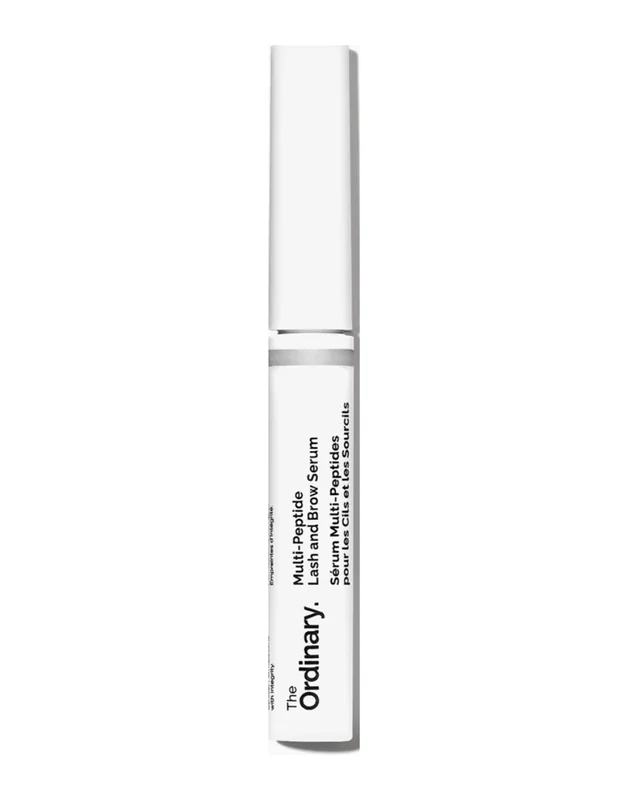 The Ordinary The Ordinary |
8.2 | Peptide | 9.2/10 | ~$15 | Best budget |
 Vegamour GRO Vegamour GRO |
8.6 | Botanical | 9.4/10 | ~$50 | Botanical-first label |
 NuOrganic Cosmic Lash NuOrganic Cosmic Lash |
8.2 | Peptide | 9.0/10 | ~$30 | Best peptide-based |
 Latisse Latisse |
8.8 | Prostaglandin (Rx) | 5.0/10 | ~$150+ | Best prescription |
 Obagi Nu-Cil Obagi Nu-Cil |
7.6 | Prostaglandin | 5.6/10 | $100 | Brand-study summary |
 M2 Beaute M2 Beaute |
7.2 | Prostaglandin | 5.4/10 | $184 | Best premium European analogue |
 LashFood LashFood |
8.4 | Peptide + Botanical | 9.3/10 | ~$88 | Best conditioning |
How to read this table: The score combines our ingredient-and-warning screen with our evidence-and-observation screen. It is an editorial comparison, not a clinical safety, efficacy, speed, or risk-benefit measure.
Best Overall: SOWN Root 1 Lash Serum
Overall Score: 9.4/10 | Warning Rubric: 9.6/10 | Price: $58 | Full review →
SOWN Root 1 earns the top overall spot under our rubric. Its reviewed label lists several peptides and did not list a covered prostaglandin analogue name. Ingredient presence does not prove that one peptide caused our panel result.
Our three-person panel used a 12-week window. No controlled head-to-head study reviewed here shows that peptide serums match bimatoprost or another prostaglandin analogue for lash growth. Our scores and tester observations are not proof of equal results. For a week-by-week breakdown, see our lash serum timeline guide.
The reviewed label and brand materials describe a vegan, fragrance-free formula. Those facts do not prove suitability for reactive skin. At $58 per tube when checked, it sits in the middle of this price comparison.
Best for: Shoppers who want our highest rubric score and a reviewed label without the analogue names covered by our checker. That label screen does not prove safety or results.
Pros: Highest overall score in our rubric; three-person panel over 12 weeks; reviewed label lists several peptides; good value in this comparison.
Cons: No controlled head-to-head evidence against bimatoprost; only available online through the brand website; newer brand with less long-term market history.
Cosmetic IPCP Pick: RapidLash Eyelash Enhancing Serum
Overall Score: 9.0/10 | Warning Rubric: 6.2/10 | Price: ~$45 | Full review →
The reviewed RapidLash ingredient label lists isopropyl cloprostenate, or IPCP. Health Canada's current Cosmetic Ingredient Hotlist prohibits prostaglandins, their salts, derivatives, and analogues in cosmetics and specifically names IPCP. In 2026, the SCCS said IPCP could not be considered safe for its intended cosmetic lash and brow use.
The formula uses a thin-tip applicator. We found no controlled product evidence here that proves a 4-to-6-week result, a typical response rate, or superiority to peptide-only formulas.
These sources do not show that IPCP is the sole cause of a product's results, provide a product-specific side-effect rate, or prove that its benefit and risk profile is identical to bimatoprost. For the exact evidence boundaries, see our side effects guide.
At approximately $45 when checked, RapidLash was among the lower-price cosmetic analogue products in this comparison and was widely available.
Decision note: Its reviewed label lists IPCP. Ask an eye-care clinician about personal risks instead of transferring LATISSE warnings or rates to this product.
Pros: Lower price in its category; widely available; fine applicator.
Cons: Reviewed label lists IPCP; the 2026 SCCS opinion could not consider IPCP safe for its intended cosmetic use; no product-specific event rate established here.
Best Budget: The Ordinary Multi-Peptide Lash and Brow Serum
Overall Score: 8.2/10 | Warning Rubric: 9.2/10 | Price: ~$15 | Full review →
At under $15 when checked, The Ordinary is our lowest-price pick. Its reviewed label lists several peptide complexes, caffeine, and panthenol, and the product is labeled for lashes and brows. Biotinoyl Tripeptide-1 is a peptide name; it is not the same label entry as standalone biotin.
We found no controlled finished-formula evidence here that establishes a typical result, timeline, or comparison with SOWN Root 1 or RapidLash. The low price does not make an eye-area cosmetic risk-free.
The applicator is a doe-foot wand that is larger than some fine brushes. Its reviewed label omitted the analogue names covered by our checker, but that does not prove daily tolerability.
Best for: Budget-conscious shoppers who want a lash-and-brow formula with a peptide-labeled ingredient list.
Pros: Unbeatable price; solid multi-peptide formula; doubles as brow treatment; transparent ingredient philosophy; available at most beauty retailers.
Cons: Limited controlled finished-formula evidence; applicator could be more precise.
Botanical-First Pick: Vegamour GRO Lash Serum
Overall Score: 8.6/10 | Warning Rubric: 9.4/10 | Price: ~$50 | Full review →
Vegamour GRO uses a plant-based formula. The current official label lists red clover and mung bean sprout extract, Acetyl Tetrapeptide-3, magnolia bark extract, and glycerin. A label does not show which ingredient caused a finished-formula result.
Vegamour reports a 60-day study of 30 participants using the finished serum twice daily. The public product page does not provide enough detail to establish peer review or independent replication, so we treat it as brand-reported finished-formula evidence.
The current formula page lists a botanical-forward blend and no covered analogue name. Our small panel described the texture as lightweight and non-sticky; no tester reported irritation. This is not a 0% clinical irritation rate and cannot predict every user's response.
Best for: Shoppers who prefer a vegan, botanical-forward label. A label preference is not proof of sensitive-eye suitability.
Pros: Vegan formula; lightweight texture in our panel; widely available at Sephora; brand reports a 60-day study of 30 participants.
Cons: Brand-reported study, not peer-reviewed controlled evidence; no universal tolerability or comparative efficacy established.
Best Peptide-Based: NuOrganic Cosmic Lash Serum
Overall Score: 8.2/10 | Warning Rubric: 9.0/10 | Price: ~$30 | Full review →
NuOrganic is a mid-range peptide formula. Its reviewed label lists peptides, panthenol, and amino acids and did not list a covered prostaglandin analogue name. Those label facts do not establish concentration, follicle action, or effectiveness.
NuOrganic earns its "best peptide-based" designation from our rubric, not a disclosed concentration comparison or a controlled head-to-head study. The public label does not reveal enough information to claim that it targets a growth pathway more strongly than another formula.
Our panel described the texture as thin and quick to absorb. That does not establish a typical timeline, eye-migration risk, or comparison with other formulas. At approximately $30 when checked, NuOrganic sits in the middle of this price range.
Best for: Shoppers who want a mid-price, peptide-labeled formula.
Pros: Mid-range price; quick-absorbing texture in our panel; widely available on Amazon.
Cons: Limited finished-formula evidence; basic packaging.
Best Prescription: Latisse (Bimatoprost)
Overall Score: 8.8/10 | Warning Rubric: 5.0/10 | Price: ~$150+ (prescription required) | Full review →
Latisse is in a category of one. It is the only FDA-approved prescription treatment for inadequate or insufficient eyelashes (clinical term: hypotrichosis). Its active ingredient, bimatoprost 0.03%, is a prostaglandin analog originally developed to treat glaucoma that was repurposed for cosmetic lash growth after doctors noticed the side effect of longer, thicker lashes in patients.
LATISSE has controlled evidence for its exact prescription use. In a randomized, double-masked, vehicle-controlled trial of 278 adults, 107 of 137 LATISSE users, or 78%, versus 26 of 141 vehicle users, or 18%, improved by at least one grade on the Global Eyelash Assessment at week 16. The label warns about eye and eyelid reactions and possible pigmentation changes; iris pigmentation may be permanent. These results and event rates should not be transferred to another analogue. The label says its most common trial adverse events each occurred in fewer than 4% of patients.
LATISSE requires a prescription. Its label says lash appearance is expected to return to the pretreatment level after stopping, but it does not give a universal recovery timeline. At $150 or more per 3-month supply when checked, it was the highest-price option here.
Decision note: This prescription treatment is for eyelash hypotrichosis and should be discussed with a prescriber.
Pros: FDA-approved for its exact prescription use; controlled label evidence; prescribed use.
Cons: Prescription required; highest price here; label includes eye, eyelid, and pigmentation warnings.
Brand-Study Cosmetic Analogue: Obagi Nu-Cil
Overall Score: 7.6/10 | Warning Rubric: 5.6/10 | Price: $100 | Full review →
Obagi publishes a 16-week brand study for its NouriPlex formula and participant-reported appearance outcomes. Brand evidence must be read with its design and disclosures; it is not equivalent to LATISSE's FDA-reviewed prescription evidence.
The reviewed ingredient list includes dehydrolatanoprost, biotin, panthenol, and sodium hyaluronate. The label identifies ingredients but does not establish which one caused an outcome or a product-specific adverse-event rate.
Decision note: Compare the exact label and study, and ask a clinician about personal eye or pregnancy concerns.
Pros: Public brand-study summary; clear directions; accessible ingredient page.
Cons: Contains dehydrolatanoprost; $100 price; cosmetic-claims language can obscure the analogue tradeoff for casual readers.
Best Premium European Analogue: M2 Beaute Eyelash Activating Serum
Overall Score: 7.2/10 | Warning Rubric: 5.4/10 | Price: $184 | Full review →
M2 Beaute is a premium European analogue serum with a large 4mL tube, a fine-liner applicator, and bold 6 to 8 week result claims. The official ingredient list includes norbimatoprost plus panthenol, biotin, sodium hyaluronate, and amino-acid conditioners.
The analogue ingredient is visible in the reviewed list. The public evidence detail is thinner than the sources reviewed for Obagi and LATISSE. That is an evidence comparison, not a product-specific risk estimate.
Decision note: Premium shoppers should compare the exact analogue evidence and ask a clinician about personal concerns.
Pros: Clear norbimatoprost listing; 4mL tube; conditioning support ingredients; precise brush applicator.
Cons: Very expensive; not prostaglandin-free; less clinically transparent than Obagi or Latisse; less convenient for US shoppers.
Best Conditioning: LashFood Phyto-Medic Eyelash Enhancer
Overall Score: 8.4/10 | Warning Rubric: 9.3/10 | Price: $78 | Full review →
LashFood's current official label lists botanical waters and extracts, arginine, hydrolyzed soy and rice proteins, and adenosine in what the brand calls its Phyto-Medic complex. It does not list a peptide INCI name or biotin.
We use "conditioning" as an editorial category for this botanical- and protein-labeled formula. The label does not prove stronger lashes, faster fullness, or a special benefit for breakage-prone lashes.
The brand describes the formula as Ecocert-certified, dermatologist-tested, vegan, and formulated without several ingredient classes. The official 3mL page listed $78 when checked July 11, 2026. We found no controlled evidence here proving universal tolerability or comparative results.
Best for: Shoppers who prefer a premium, conditioning-forward label and understand the formula-level evidence limits.
Pros: Ecocert certification claimed by the brand; broad ingredient list; small-panel texture observations.
Cons: Premium price; no controlled evidence here for a peptide mechanism or comparative growth.
How Lash Serums Work: The Science
The lash cycle provides useful background, but it does not prove how every serum works. Finished-formula evidence is still required.
This is also why viral shortcuts do not hold up. For example, crying does not make eyelashes longer; tears can change how lashes look temporarily, but they do not change the growth cycle.
Three Ingredient Categories
Evidence boundaries for three common label categories.
The Lash Growth Cycle
Every eyelash goes through three distinct phases:
- Anagen: the active growth phase.
- Catagen: a transition phase after active growth.
- Telogen: a resting phase before the lash sheds and a new cycle begins.
A diagram of the natural cycle does not show that every lash serum changes a cycle phase. Use the evidence for the exact finished formula.
Prostaglandin Analogues: Exact Product Evidence
The LATISSE label supports bimatoprost for its exact prescription eyelash use. That drug-specific evidence should not be transferred to IPCP or another cosmetic analogue.
The LATISSE label warns about eye and eyelid reactions and possible pigmentation changes. Postmarketing reports include periorbital and lid changes, but they do not establish frequency. For the exact boundaries, see our side effects guide.
Peptides: Finished-Formula Evidence
Peptides are small chains of amino acids. Small human studies have tested finished serums containing several ingredients. In a 2020 study, 29 people completed 90 days of use and average lash length rose 10.52%. In a 2024 study, 30 people completed 12 weeks and average lash length rose 8.3%. Neither study used a look-alike control serum, and neither can show that one peptide caused the change. We found no controlled human study showing that Myristoyl Pentapeptide-17 alone grows lashes or that peptide serums work as well as bimatoprost.
The 2020 study received a SkinGen International educational grant. The 2024 paper reported Cantabria Labs author and funding ties.
A 2025 Danish project measured three exact peptides in 19 serums: Myristoyl Pentapeptide-17, Biotinoyl Tripeptide-1, and Acetyl Tetrapeptide-3. It found no immediate health concern under the exposure assumptions used. It also found no direct toxicology data for those peptides, so it could not calculate a full safety margin. This does not prove that every peptide serum is safe, irritation-free, or safe during pregnancy. Read more in our peptide lash serums guide.
Botanicals: Formula-Specific Evidence
Botanical extracts can have cosmetic functions, but label presence and laboratory theories do not prove human eyelash growth. Use evidence for the exact finished formula.
"Plant-based" and "natural" do not establish safety or suitability for reactive skin. For more on ingredient categories, explore our ingredient guide.
What to Check: Named Analogues and Possible Irritants
Analogue names can be long and hard to read. Formula labels can also change. Compare the package in your hand with exact product and regulator sources.
Exact Prostaglandin Analogue Names
Look for exact names instead of guessing from part of a word. The current GrandeLASH-MD and NeuLash labels we reviewed list isopropyl cloprostenate. Seeing the same name does not prove that two finished products work the same way, work equally well, use the same amount, or have the same side-effect rate.
- Bimatoprost (the active ingredient in Latisse; prescription only)
- Isopropyl cloprostenate (listed on the current GrandeLASH-MD and NeuLash labels we reviewed)
- Dechloro dihydroxy difluoro ethylcloprostenolamide (an exact analogue name assessed by SCCS; not on the current NeuLash label we reviewed)
- Dehydrolatanoprost (found in Obagi Nu-Cil)
- Norbimatoprost (found in M2 Beaute)
- Methylamido dihydro noralfaprostal
- Trifluoromethyl dechloro ethylprostenolamide
- Cloprostenol isopropyl ester
Common Irritants
Any eye-area cosmetic can irritate some people. The finished formula, concentration, exposure, and user all matter. These names may prompt a closer label review, not an automatic verdict:
- Benzalkonium chloride: Check the exact product directions, especially for contact-lens use.
- Fragrance: People with a known fragrance sensitivity may prefer fragrance-free labels.
- Phenoxyethanol: Presence alone does not reveal concentration or predict irritation.
- Alcohol denat.: Tolerability depends on the full formula and user.
We screened the dated labels for the exact names in our rubric. That screen does not prove low irritation potential. See our side effects guide.
Frequently Asked Questions
Do lash serums really work?
LATISSE has controlled evidence for its exact prescription use. Small uncontrolled studies have also tested multi-ingredient cosmetic formulas, but those studies cannot isolate one peptide or prove that all lash serums work. See our guide on whether lash serums work for the evidence levels.
Are lash serums safe?
Safety depends on the exact ingredient, formula, exposure, directions, and person. The LATISSE label contains drug-specific warnings. A 2025 Danish peptide assessment found important data gaps, so a prostaglandin-free label does not prove that a cosmetic serum is safe for every user.
How long does it take to see results?
There is no proven timeline for an ingredient class. The LATISSE label reports its exact primary endpoint at week 16; cosmetic formulas need their own evidence. A product may not produce visible growth. See our timeline guide.
Can lash serums change your eye color?
The LATISSE label warns that increased iris pigmentation may occur and may be permanent. Do not transfer that product-specific event rate or mechanism to every analogue. A peptide or botanical label also does not prove zero eye risk. Ask an eye-care clinician if pigmentation changes concern you.
What is the difference between prostaglandin and peptide serums?
Bimatoprost has controlled evidence for the exact LATISSE prescription use. Peptide studies reviewed here tested multi-ingredient formulas without look-alike controls. No controlled head-to-head study reviewed here shows that peptide serums match bimatoprost. For a deeper comparison, read our peptide lash serums guide.
Which is the most effective eyelash growth serum?
LATISSE has the strongest controlled evidence among products in this guide for its exact prescription use. Our cosmetic-product scores combine several dimensions and do not prove equal effectiveness. For another analogue, use evidence for that exact ingredient and finished product rather than transferring LATISSE results.
What grows lashes really fast?
LATISSE has controlled 16-week evidence for its exact prescription use. We do not transfer that result or its event rates to cosmetic analogues. Peptide and botanical formulas need their own finished-product evidence and can still irritate the eye area. See our before and after guide for evidence limits.
Sources
- U.S. Food and Drug Administration. Latisse (bimatoprost ophthalmic solution) 0.03% Information. FDA.gov.
- U.S. Food and Drug Administration. Latisse Prescribing Information (Full Label). FDA.gov.
- Filippopoulos T, Paula JS, Torun N, Hatton MP, Pasquale LR, Grosskreutz CL. (2008). Periorbital changes associated with topical bimatoprost. PubMed/NIH.
- Smith, S. et al. (2009). Bimatoprost ophthalmic solution for eyelash growth: a systematic review. PubMed/NIH.
- Obagi. Obagi Nu-Cil Eyelash Enhancing Serum product page.
- M2 Beaute. M2 Beaute Eyelash Activating Serum product page.
- National Eye Institute. Glaucoma: What You Need to Know. NEI/NIH.
- National Center for Biotechnology Information. PubMed Central. NIH/NLM.