The short answer
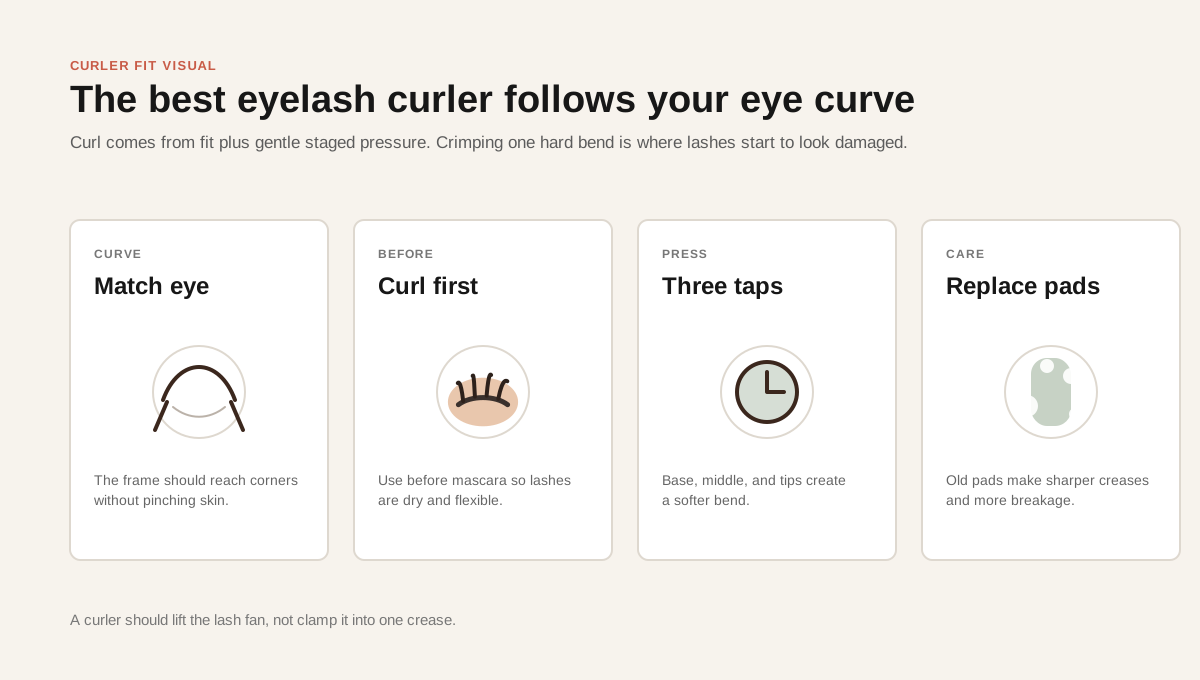
The best eyelash curler is the one whose curve matches your eye shape, whose pad is cushioned and replaceable, and whose clamp lets you press lightly in stages. Curl before mascara, never after mascara has dried.
Key takeaways
- Eye shape matters more than brand hype.
- Curl before mascara to reduce sticking, bending, and lash breakage.
- A clean, soft pad is not optional. Replace cracked pads.
- If curling hurts, the curler does not fit or the technique is too aggressive.
How to Choose an Eyelash Curler That Fits
A curler should reach most lashes without pinching the eyelid. If it only curls the center or catches skin at the corners, the curvature is wrong for your eye.
| Eye or lash type | Curler direction | Why |
|---|---|---|
| Round eyes | More curved curler | Follows the eye shape and reaches the corners. |
| Almond eyes | Medium curve | Balances center lift and corner access. |
| Hooded eyes | Slim top bar and careful angle | Reduces lid pinching. |
| Straight lashes | Cushioned pad plus staged presses | Builds curl gradually instead of bending one crease. |
| Short lashes | Narrower opening or detail curler | Helps reach small inner and outer lashes. |
How to Use an Eyelash Curler Safely
Use it on clean, dry lashes before mascara. Look downward into a mirror, place the curler close to the lash base without grabbing skin, and use light pulses instead of one hard squeeze.
Clean the curler regularly. Mascara residue, oil, and old product can make pads sticky, which increases pulling.
Eyelash Curler Mistakes That Cause Breakage
Most curling damage comes from pressure, timing, or old pads.
- Curling after mascara dries.
- Using cracked or sticky silicone pads.
- Clamping too hard at one point.
- Pulling the curler away before fully opening it.
- Curling while lashes are brittle from extensions, lift damage, or irritation.
Curler vs Lash Lift vs Mascara
A curler is the cheapest way to test whether curl changes your look. If you love the effect but hate doing it daily, a lash lift may be worth considering. If lashes still disappear after curling, mascara type or lash density may be the bigger issue.
| Option | Best for | Tradeoff |
|---|---|---|
| Eyelash curler | Daily flexible curl | Requires technique every time. |
| Lash lift | Weeks of curl | Chemical service near the eye. |
| Tubing mascara | Hold and smudge control | Less dramatic than extensions. |
FAQ
Can an eyelash curler damage your lashes?
Yes, if you clamp too hard, curl after mascara, use old sticky pads, or pull before opening the curler.
Should you curl lashes before or after mascara?
Curl before mascara. Curling after mascara dries can make lashes stick to the pad and break.
How often should you replace eyelash curler pads?
Replace pads when they crack, flatten, get sticky, or stop cushioning the clamp. Many people replace them every few months.
Why does my curler pinch?
The curve may not match your eye shape, or the curler may be placed too close to the eyelid skin.