The short answer
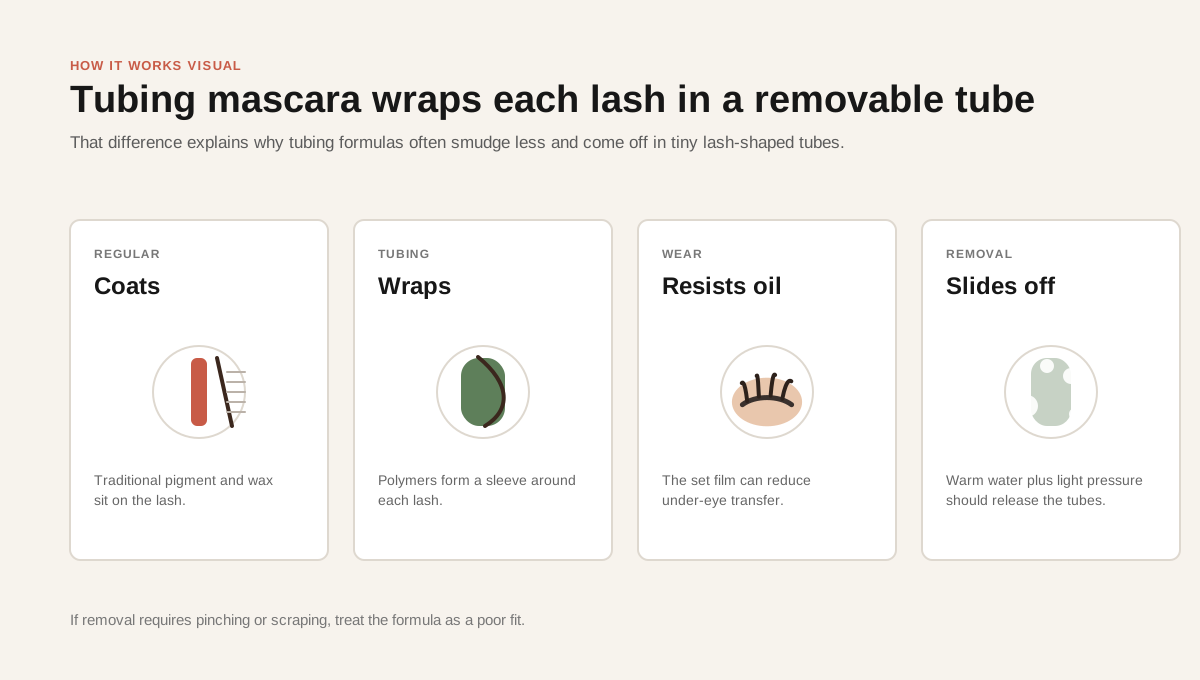
Tubing mascara forms lightweight polymer tubes around each lash instead of painting on a traditional waxy film. It is often best for oily lids, smudge-prone eyes, lower lashes, and anyone who wants mascara that removes with warm water and gentle pressure.
Key takeaways
- Tubing mascara is usually a length and separation product first, not a maximum-volume product.
- It often removes with warm water because the tubes slide off the lashes instead of dissolving like regular mascara.
- People with oily lids, watery eyes, or under-eye transfer often prefer tubing formulas.
- If you want soft, feathery volume, tubing can feel too crisp unless the formula is flexible.
What Is Tubing Mascara?
Tubing mascara uses film-forming polymers that wrap around lashes. When it sets, each lash is coated in a tiny tube. That tube can resist oil and smudging better than many traditional formulas.
The easiest way to identify tubing mascara is removal. With warm water and gentle pressure, the coating often slides off in little pieces that look like lash-shaped flakes. Those are usually the tubes, not your real lashes.
Who Tubing Mascara Fits Best
Tubing is especially helpful when regular mascara smudges under your eyes even when you set concealer or avoid oily skincare.
| Use case | Why tubing helps | Possible downside |
|---|---|---|
| Oily lids | The set film may resist oil transfer better. | Can feel too dry if layered heavily. |
| Straight lashes | Lightweight formulas can preserve curl better. | Use an eyelash curler first for best lift. |
| Lower lashes | Less under-eye printing. | Choose a smaller wand. |
| Sensitive removal | Warm-water removal can reduce cotton-pad rubbing. | Stop if the formula stings or leaves residue. |
How to Remove Tubing Mascara
Soak lashes with warm water, wait a few seconds, then press lightly downward with clean fingertips or a soft cloth. Do not scrape the lash line.
If the mascara does not slide off, it may be a tubing-hybrid formula that still needs a gentle cleanser. Either way, the removal goal is the same: no pinching, no pulling, no repeated hard rubbing.
Tubing Mascara vs Waterproof Mascara
Waterproof mascara is better for tears, swimming, sweat, or events. Tubing mascara is often better for everyday smudge control because it can remove more gently.
| Formula | Best for | Removal |
|---|---|---|
| Tubing mascara | Daily smudge control, oily lids, lower lashes | Warm water and gentle pressure for many formulas. |
| Waterproof mascara | Water, tears, sweat, weddings, humid events | Oil-based remover and extra patience. |
| Regular washable mascara | Soft volume, easy layering, classic finish | Cleanser or eye makeup remover. |
FAQ
Does tubing mascara damage lashes?
Tubing mascara should not damage lashes when it removes easily. Damage risk rises if you peel, pinch, or pull instead of soaking it off.
Can tubing mascara hold a curl?
Many tubing formulas are lightweight enough to preserve curl, but very straight lashes usually still need a good eyelash curler first.
Why does tubing mascara come off in pieces?
Those pieces are usually the polymer tubes sliding off the lashes. They can look like lashes, but they should not have a hair root attached.
Is tubing mascara good for sensitive eyes?
It can be, especially if removal is gentle, but sensitivity is personal. Stop using any eye cosmetic that causes irritation.