The short answer
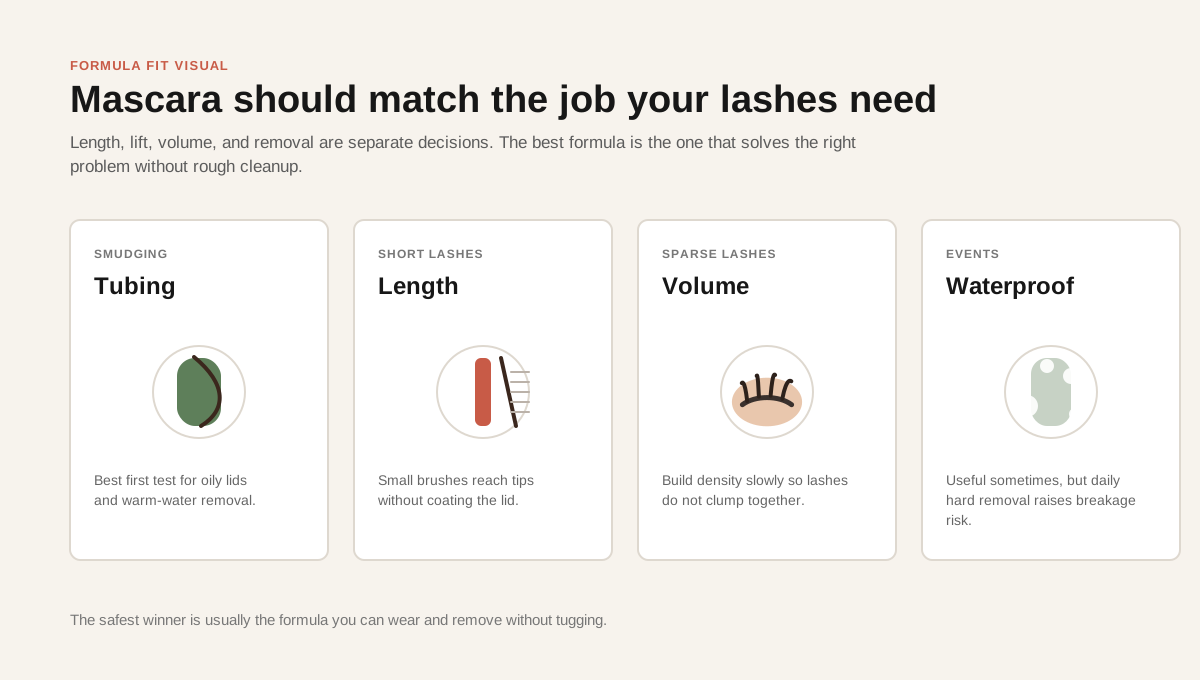
Choose mascara by the job you need it to do: tubing for smudge control and easier removal, lengthening for short lashes, volumizing for sparse lashes, waterproof only for occasional wear, and washable sensitive-eye formulas when irritation or lash shedding is your main concern.
Key takeaways
- A great mascara should match your lash type, not just promise length or volume.
- Tubing formulas are often the safest first test for oily lids or flaking because they remove with warm water and light pressure.
- Waterproof mascara can be useful for events, but rough removal is where lash damage usually starts.
- If mascara always irritates your eyes, treat that as a product-fit signal, not something to push through.
Best Mascara by Lash Type
Start with your actual lashes. A mascara that looks dramatic on long, curled lashes can look heavy or clumpy on short, straight lashes.
| Your lashes | Best mascara direction | Why it fits | What to avoid |
|---|---|---|---|
| Short lashes | Lengthening or tubing mascara with a small brush | The goal is separation and visible tip extension, not heavy bulk. | Oversized hourglass brushes that coat the lid more than the lashes. |
| Straight lashes | Curl-holding washable mascara or tubing mascara after curling | A lighter film helps preserve curl better than wet, heavy volume formulas. | Very wet formulas before the curl has set. |
| Sparse lashes | Buildable volumizing mascara | A flexible formula lets you add density in thin areas without spider-leg clumps. | One thick coat that glues neighboring lashes together. |
| Sensitive eyes | Fragrance-free, washable, easy-remove formulas | Less rubbing at night usually matters as much as the ingredient list. | Old tubes, shared testers, and formulas that sting on first contact. |
| Extensions or lift | Ask your artist, then use washable mascara on tips only if approved | Adhesive and lifted lashes need gentle removal. | Oil-heavy removers, waterproof mascara, or mechanical curlers on lifted lashes. |
How We Would Test a Mascara
A useful mascara test looks beyond the first application: it checks six-hour wear, removal, flaking around the eyes, and the rubbing needed to get lashes clean.
That removal step is where a lot of quiet damage happens. If a mascara looks good but takes hard scrubbing to remove, it is a poor fit for fragile, recovering, or extension-prone lashes.
Does it make lashes visible without clumping the base?
Does it smudge, flake, or print under the brow bone?
Can it come off without tugging or repeated cotton-pad pressure?
Does it sting, shed fibers, or make eyes water?
Mascara Safety Rules That Actually Matter
Mascara is used close to the eye, so hygiene matters. Replace tubes regularly, do not add water or saliva to revive dried mascara, do not share mascara, and skip eye makeup while you have an eye infection or inflamed skin around the eye.
The FDA specifically warns that applicators can scratch the eye if used while moving and that contaminated eye cosmetics can cause infections. That is boring advice until it prevents a real problem.
Mascara vs Lash Serum vs Extensions
Mascara changes the look of the lash for one day. Serum supports the lash routine over weeks. Extensions add instant density but bring maintenance and removal risk. The best choice depends on whether you need a one-day cosmetic effect or a longer-term lash plan.
| Goal | Best starting point | Why |
|---|---|---|
| Look better tonight | Mascara or clusters | Fastest visible result. |
| Stop smudging | Tubing mascara | Easier warm-water removal and less transfer for many users. |
| Recover from damage | Growth routine | The priority is reducing breakage and supporting the growth cycle. |
| Add dramatic density | Extensions or clusters | Mascara cannot create extra rows of lashes. |
FAQ
What mascara is best for short lashes?
A small-brush lengthening or tubing mascara is usually the best first test because it reaches short lashes without overloading them.
Is tubing mascara better than regular mascara?
Tubing mascara is better if your main problem is smudging, flaking, or hard removal. Regular mascara may be better if you want plush volume.
Is waterproof mascara bad for lashes?
Waterproof mascara is not automatically bad, but daily use plus rough removal can increase breakage and shedding.
How often should you replace mascara?
Many manufacturers recommend replacing mascara every two to four months. Replace it sooner if it smells different, dries out, or you had an eye infection.